
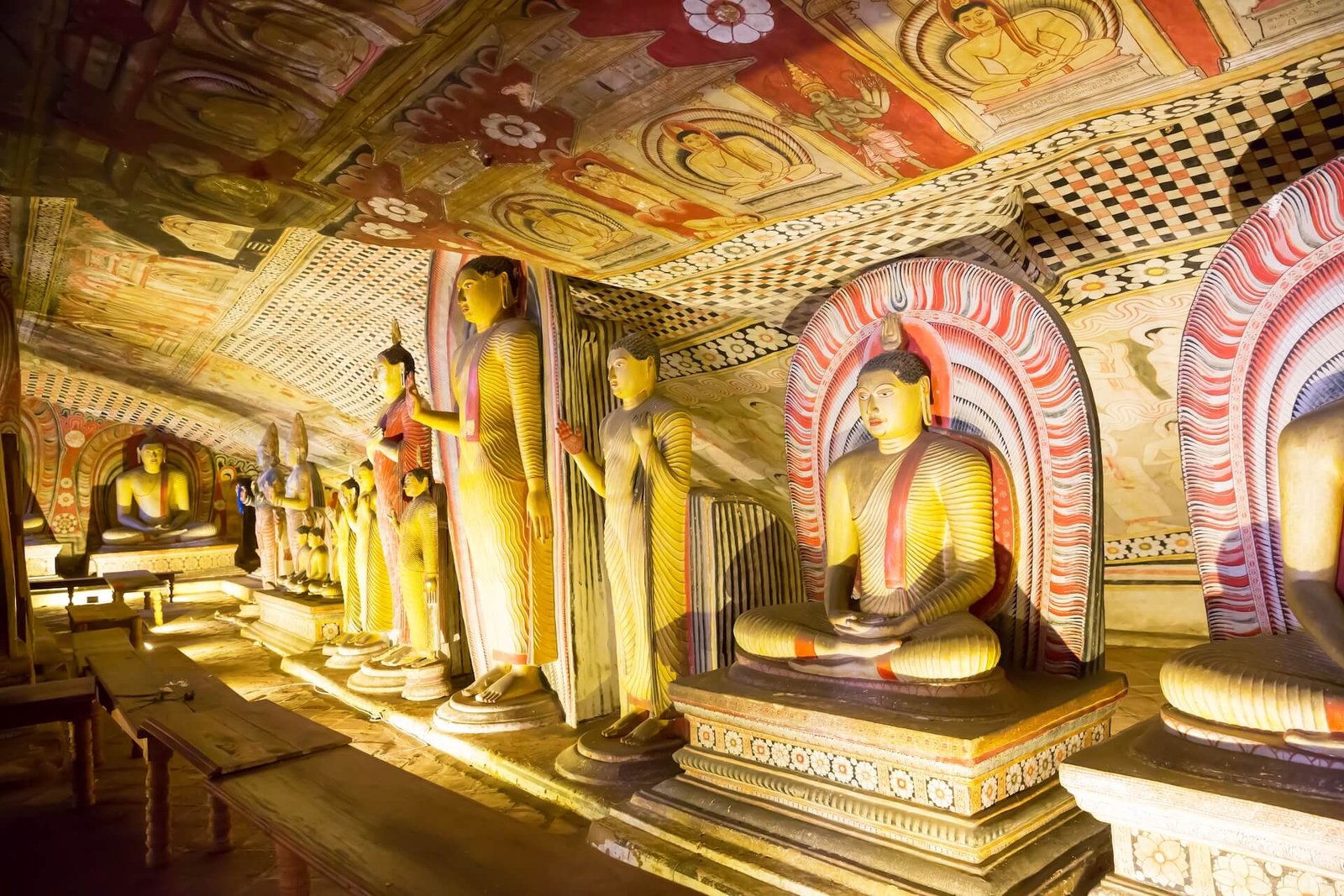
Few places capture the imagination like Sigiriya and Dambulla. These two UNESCO World Heritage sites showcase the ingenuity and artistry of ancient Sri Lanka. Sigiriya is a dramatic rock fortress rising nearly 200 metres above the surrounding plains. Dambulla, a short drive away, houses an extensive cave temple complex with vivid murals and hundreds of Buddha statues. This guide explores the history, legends and practicalities of visiting both sites. Whether you are fascinated by archaeology, art or just want to enjoy epic views, Sigiriya and Dambulla are essential stops on any Sri Lanka itinerary.
The Story of Sigiriya
Sigiriya is often called the Lion Rock because of the giant pair of lion paws that once flanked its entrance. Built in the 5th century by King Kassapa, the rock served as his royal palace and fortress. According to legend, Kassapa killed his father to seize the throne. Fearing retribution from his half‑brother, Moggallana, he moved the capital from Anuradhapura to Sigiriya, where he constructed a remarkable complex with water gardens, frescoes and defensive walls. Eventually Kassapa was defeated in battle, and Sigiriya became a Buddhist monastery.
Today, visitors climb a series of stairways and metal steps to reach the top. Along the way you pass frescoes known as the “Sigiriya maidens.” These painted women are set in a sheltered rock face about halfway up. Their graceful poses and elaborate jewellery offer insight into the artistic style of the time. Farther up, you walk through the Mirror Wall, a once‑polished surface covered with ancient graffiti. Many of these inscriptions date back to the 8th century and express admiration for the site. At the summit, the foundations of Kassapa’s palace are visible. From here you can enjoy panoramic views of the surrounding countryside, including forests, mountains and water reservoirs.
Preparing for the Climb
The climb to the top of Sigiriya takes between 30 and 60 minutes depending on your pace. The stairways can be steep and narrow, and there are sections with open railings. If you are uncomfortable with heights, take your time and use the handrails. Wear comfortable shoes with good grip. Bring water and sun protection. The site opens early in the morning, and it is wise to start the climb as soon as possible to avoid the midday heat and crowds.
Tickets for Sigiriya must be purchased at the main entrance. Foreign visitors pay a higher fee than locals. The ticket grants access to the entire complex, including the water gardens, boulder gardens, mirror wall, frescoes and summit. Guides are available at the entrance. Hiring a guide can enhance your visit by providing context on the history and meaning of the frescoes, gardens and architecture.
Exploring the Water and Boulder Gardens
Before starting the ascent, take time to explore the lower gardens. The water gardens feature symmetrical pools, channels and fountains. They were designed to cool the air and create a pleasant environment. During the wet season, some fountains still operate, powered by gravity and simple hydraulics. The boulder gardens contain winding paths, caves and terraces. Look for ancient paintings on the walls of some caves, where monks later meditated.
The Frescoes and Mirror Wall
About halfway up the rock, a spiral staircase leads to a sheltered gallery containing painted frescoes. The murals depict female figures adorned with jewellery and elaborate hairstyles. Scholars debate their identity—some say they represent celestial maidens, while others suggest they depict Kassapa’s queens. Regardless of their origin, the paintings showcase vibrant colours and delicate brushwork.
After viewing the frescoes, you will walk along the Mirror Wall. Originally, this wall was polished so finely that the king could see his reflection as he walked past. Over the centuries, visitors scratched poetry and comments into the surface. These inscriptions, written in ancient Sinhalese, are among the earliest examples of Sri Lankan literature.
Reaching the Lion Platform
Continuing upward, you arrive at the Lion Platform. Here you will see two enormous lion paws carved out of the rock. The stairs once rose through the lion’s open mouth, but the head has not survived. This entrance underscores the defensive nature of Sigiriya and the symbolic power of the lion in Sri Lankan culture. Rest here if needed; benches are available, and the platform offers views across the forest.
The Summit of Sigiriya
The final ascent to the summit is via a narrow metal staircase attached to the rock face. At the top, you will find the foundations of the royal palace and remains of cisterns carved into the rock to store water. Imagine the effort involved in building such a complex structure atop a sheer rock. Wander around the site to see the ruins of walls and terraces. The view from the summit is breathtaking—lush green forests punctuated by other rocky outcrops and distant hills. Spend time here absorbing the panorama before beginning your descent.
Practical Tips for Sigiriya
- Visit early morning or late afternoon to avoid heat and crowds.
- Carry drinking water and wear sun protection.
- Wear comfortable footwear with good grip.
- Use the toilets at the base before starting the climb; there are none on the way up.
- Be careful with children; some staircases are steep with open sides.
- Photography is allowed, but flash and tripods may be restricted near frescoes.
Dambulla: Sri Lanka’s Painted Caves
A short drive from Sigiriya lies Dambulla, home to the island’s largest cave temple complex. Known as the Golden Temple of Dambulla, it consists of five main caves carved into a 160‑metre high rock. The caves have been a sacred pilgrimage site for over two thousand years. They house more than 150 Buddha statues and cover approximately 2,100 square metres of murals depicting scenes from the life of the Buddha and Sri Lankan history.
History of the Dambulla Caves
Legend states that King Valagamba took refuge in these caves in the 1st century BCE after he was driven out of Anuradhapura by South Indian invaders. After regaining the throne, he transformed the caves into a temple complex in gratitude. Subsequent kings added statues and paintings. During the 18th century, King Kirthi Sri Rajasinha commissioned restorations and new artwork, giving the caves much of their current appearance.
Touring the Caves
To reach the caves, you climb a series of steps that wind up the rock face. The hike is moderate and takes about 10 to 15 minutes. At the entrance you must remove your shoes. Leave them at the designated counter for a small fee or carry them in a bag. Each cave is numbered and has a unique character:
- Cave 1: Devaraja Lena—Known as the Cave of the Divine King, it contains a 14‑metre reclining Buddha carved from the rock. Statues of his disciple Ananda and the Hindu god Vishnu stand nearby.
- Cave 2: Maharaja Vihara—Also called the Temple of the Great Kings, it is the largest cave. Statues of Kings Valagamba and Nissanka Malla stand alongside 16 standing Buddhas. The ceiling is covered in brightly coloured murals depicting scenes from the Buddha’s life.
- Cave 3: Maha Alut Vihara—This cave features a large seated Buddha flanked by standing Buddhas. The walls are decorated with paintings and the ceiling is covered with geometric patterns.
- Cave 4: Paccima Viharaya—A small cave with a seated Buddha under a hood of cobra heads, symbolising protection. It has a serene atmosphere and fewer visitors.
- Cave 5: Devana Alut Vihara—The newest of the main caves, containing a reclining Buddha and a collection of statues from the Kandyan period.
Practical Tips for Dambulla
- Dress modestly. Shoulders and knees should be covered.
- Remove shoes and hats before entering each cave. You can bring socks to protect your feet from the hot stone.
- Carry water; there are no shops at the top.
- Allow at least one hour to explore the caves. Take time to study the murals and statues.
- Be quiet and respectful; monks and worshippers may be present.
- Watch out for monkeys around the temple. They may try to grab food or shiny objects.
Combining Sigiriya and Dambulla
Many travellers visit both sites on the same day because they are only about 20 kilometres apart. If you plan to see both, start with Sigiriya in the early morning, when the weather is cooler, then visit Dambulla in the afternoon. Alternatively, spend a night in the nearby town of Sigiriya or Dambulla to explore at a more relaxed pace. A range of guesthouses and hotels cater to different budgets. You can hire a tuk‑tuk or a private car to move between sites. Public buses also run between the two towns but are less frequent.
Beyond Sigiriya and Dambulla
The area around Sigiriya and Dambulla offers more attractions. Nearby Pidurangala Rock is a popular alternative climb. It stands adjacent to Sigiriya and offers stunning sunrise views of Lion Rock. The climb is more rugged but less crowded. Minneriya and Kaudulla National Parks, both within an hour’s drive, provide opportunities to see wild elephants and other wildlife. To the north, the ancient city of Polonnaruwa awaits exploration, and to the south lies Kandy with its cultural charm.
Conclusion
Sigiriya and Dambulla offer a captivating glimpse into Sri Lanka’s past. Climbing Sigiriya allows you to appreciate the ambition of a king who built a palace atop a rock and adorned it with gardens and frescoes. Touring Dambulla’s painted caves reveals the devotion of monks and craftsmen who transformed a natural shelter into a sacred site over two millennia. Together, these places tell stories of power, faith and creativity. Plan your visit with the practical tips in this guide, take your time at each site, and let the history and beauty of Sigiriya and Dambulla inspire you.